 by
by Introduction
Stay Healthy — those two words sound simple, yet they become strangely elusive once your living room turns into an office. Working from home has rewritten the rules of daily life. Commutes vanish, pajamas linger longer than planned, and time starts melting into one long screen-filled stretch.
At first, remote work feels liberating. No traffic. No office noise. Total autonomy. But slowly, quietly, new health challenges creep in. Stiff backs. Foggy minds. Endless snacking. Days when you realize you barely stood up.
This guide is written from lived experience, not theory. It offers grounded, human advice on how to protect your body and mind while working from home — without turning your day into a military boot camp.
Health Challenges of Working from Home
Working remotely rearranges more than your schedule; it reshapes your habits.
One of the biggest issues is movement scarcity. Office force motion — walking to meetings, climbing stairs, even chatting near desks. At home, everything is within arm’s reach. The body, designed for motion, becomes startlingly still.
Another hidden problem is boundary erosion. When work and rest share the same walls, the brain struggles to switch off. Emails bleed into evenings. Breaks feel undeserved. Stress quietly accumulates.
Nutrition also takes a hit. Kitchens become tempting distractions. Meals lose structure. Hydration is forgotten until headaches appear.
Finally, posture suffers. Dining chairs were never meant for eight-hour workdays. Over time, poor alignment whispers its consequences through aching shoulders and compressed spines.
The good news? These issues are reversible with intention.
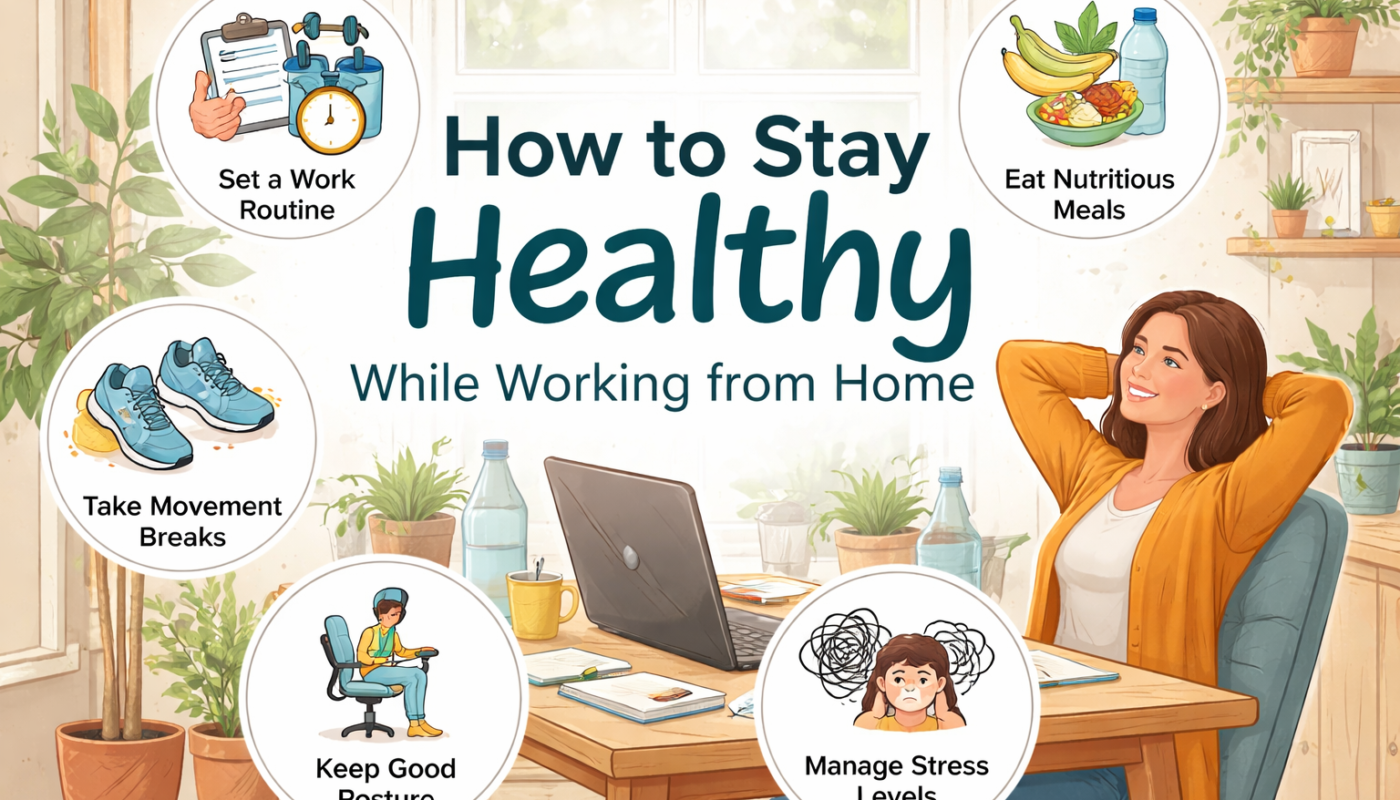
Best Ways to Stay Healthy
Set a Work Routine
Routine is not rigidity; it’s scaffolding.
Start your day at a consistent hour. Not because productivity gurus say so, but because your body craves predictability. Wake up, wash your face, change clothes — yes, real clothes. This signals your brain that the day has begun.
Designate a start ritual. It might be making tea, opening a window, or writing a short task list. These small actions act like a psychological doorway into work mode.
Equally vital is an end ritual. Shut down your laptop. Tidy your desk. Step outside, even briefly. Without closure, work lingers like background noise.
For deeper insight into structuring remote workdays, resources like Harvard Business Review offer practical guidance on sustainable routines.
Take Movement Breaks
Exercise does not require gym memberships or elaborate gear. It requires interruption.
Every 45–60 minutes, stand up. Stretch like a cat waking from a nap. Roll your shoulders. Rotate your neck gently. Walk to another room. These micro-movements lubricate joints and awaken circulation.
Schedule movement anchors into your day. A morning walk before logging in. A midday stretch session. A short evening stroll to mark the workday’s end.
If you enjoy guidance, platforms like the World Health Organization provide clear physical activity recommendations.
Movement is not about aesthetics. It’s maintenance.
Eat Nutritious Meals
Working from home can either heal or harm your eating habits.
Without preparation, meals become chaotic. Snacks replace lunches. Sugar becomes fuel. Energy crashes follow.
Create a meal rhythm. Eat at roughly the same times daily. This stabilizes blood sugar and concentration.
Prioritize foods that sustain rather than stimulate. Think whole grains, legumes, vegetables, eggs, fruits, and healthy fats. These nourish steadily, unlike processed shortcuts that spike and vanish.
Keep water visible. Hydration is often neglected simply because it’s out of sight. A refillable bottle on your desk acts as a silent reminder.
For evidence-based nutrition advice, explore resources from the Mayo Clinic.
Manage Stress Levels
Remote work stress is subtle. No boss is hovering, yet pressure intensifies internally.
Start by naming stress when it appears. Acknowledge tension instead of ignoring it. Awareness diffuses power.
Introduce mental pauses. Close your eyes for one minute. Breathe slowly. Inhale through your nose. Exhale longer than you inhale. This simple pattern calms the nervous system.
Protect your attention. Silence unnecessary notifications. Multitasking fractures focus and amplifies fatigue.
If stress becomes overwhelming, mental health organizations like Mind UK offer accessible coping strategies. Rest is not laziness. It is a repair.
Keep Good Posture
Posture shapes how you feel more than you realize.
Your screen should meet your eyes, not pull your head downward. Use books or a stand to elevate your laptop if needed.
Feet flat on the floor. Back supported. Shoulders relaxed, not creeping upward like frightened birds.
Check in with your posture hourly. Set a reminder if necessary. Correction works best when it’s frequent and gentle.
Ergonomic awareness prevents long-term discomfort far better than painkillers ever will.
Extra Tips for Long-Term Health
Sunlight matters. Step outside daily, even briefly. Natural light regulates sleep cycles and boosts mood.
Create work-only zones if space allows. Even a specific chair can train your brain to separate labor from leisure.
Stay socially connected. Remote work can feel isolating. Schedule calls with colleagues or friends who are not task-focused.
Protect sleep fiercely. Avoid screens an hour before bed. Keep a consistent sleep schedule. Recovery happens at night, not during coffee breaks.
Finally, listen to your body. Fatigue, headaches, and irritability are signals, not inconveniences.
Conclusion
Staying healthy while working from home is not about perfection. It’s about attentiveness.
Small, repeated choices shape long-term well-being. Stand more. Eat with care. Breathe deliberately. End your workday on purpose.
Your home does not have to become a silent stress factory. With mindful adjustments, it can support focus, health, and balance.
Enjoyed this article?
Please share it with friends, bookmark this page, and visit again for more helpful fitness and health tips.
Stay Healthy, not through extremes, but through consistency. Your future self will quietly thank you.


