 by
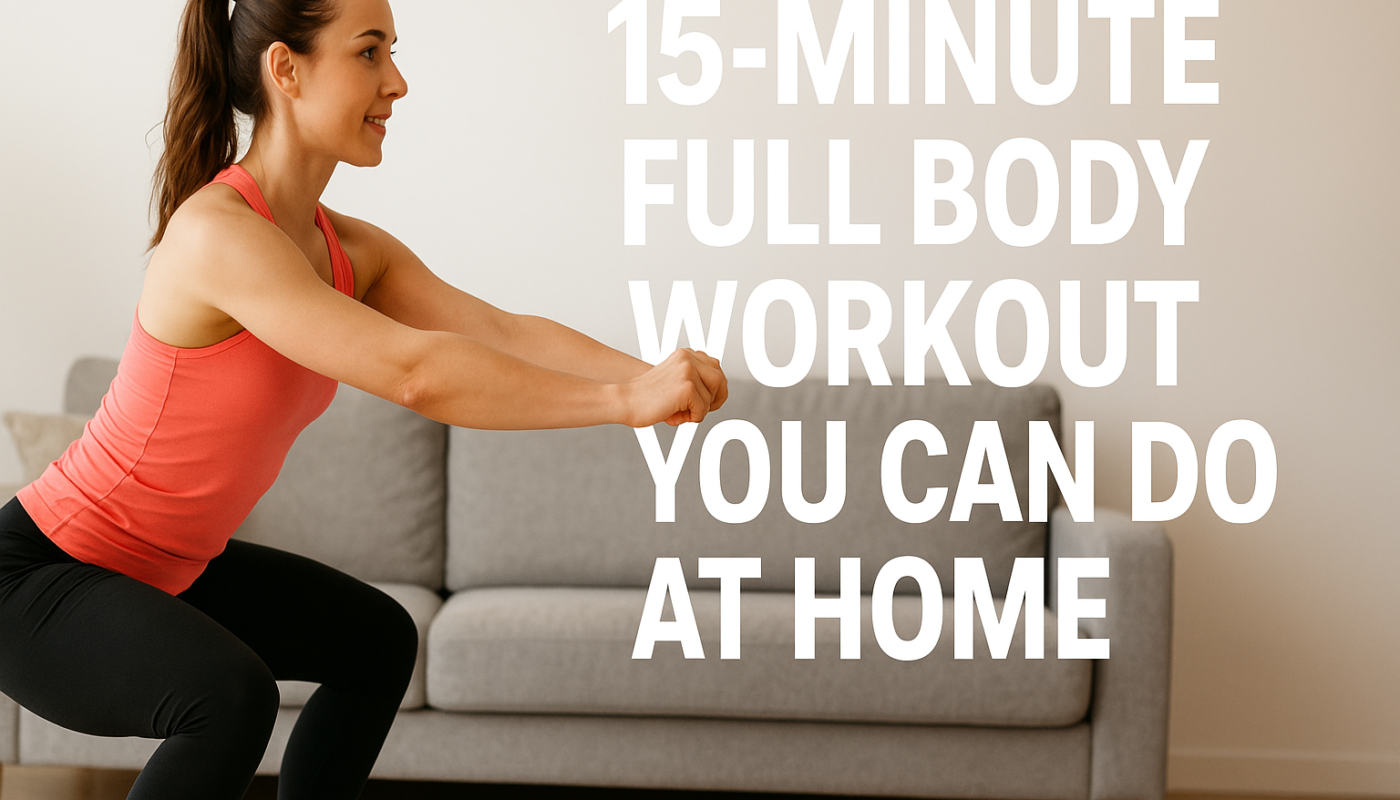
by 15-Minute Full Body Workout You Can Do at Home is one of the simplest and most effective ways to stay active, even when life feels busy or overwhelming. You don’t need a gym membership, fancy equipment, or hours of free time. With just 15 focused minutes, you can move your body, boost your energy, and feel stronger—right in your living room.
This workout is perfect for beginners, busy students, parents, or anyone who wants to stay consistent without pressure. I’ve personally relied on short home workouts during hectic days, and they truly work when done correctly.
Introduction
Many people believe that workouts must be long and exhausting to be effective. In reality, consistency matters more than duration. A 15-minute full-body workout can improve strength, endurance, and mobility when done with intention.
Think about it: 15 minutes is shorter than scrolling through social media or watching a TV episode. Yet, in that time, your body can break a sweat, activate muscles, and release feel-good hormones.
This routine is designed to be simple, balanced, and realistic. No jumping around your house or complicated moves—just effective exercises anyone can do.
Why a 15-Minute Workout Is Enough
Short workouts work because they fit into real life. When something feels manageable, you’re more likely to stick with it.
A 15-minute full-body keeps your heart rate up while engaging multiple muscle groups. This means you’re getting strength and cardio benefits at the same time.
Another advantage is recovery. Short sessions reduce the risk of burnout and soreness, especially if you’re new to exercise. You can do them more frequently without feeling drained.
For example, on days when I felt unmotivated, committing to just 15 minutes helped me stay consistent. Often, those short workouts were enough to lift my mood and improve focus for the rest of the day.
Step-by-Step 15-Minute Routine
This routine is divided into clear sections, so your whole body gets attention. You can use a timer or stopwatch, but don’t stress about being exact. Focus on form and steady movement.
Warm-Up (3 Minutes)
Never skip the warm-up. It prepares your muscles and joints and reduces the risk of injury.
Start with marching in place for about 30 seconds. Swing your arms naturally and breathe deeply.
Next, do arm circles—small circles first, then larger ones. This helps loosen your shoulders, especially if you sit a lot during the day.
Move into hip circles and gentle torso twists. These are great for waking up your lower back and core.
Finish with bodyweight squats at an easy pace. Don’t go too low; just focus on smooth movement.
By the end of these 3 minutes, your body should feel warm and ready—not tired.
Upper Body (4 Minutes)
This part targets your arms, shoulders, chest, and upper back.
Start with wall push-ups or floor push-ups, depending on your strength level. Wall push-ups are perfect for beginners and still very effective.
After that, move to arm punches. Stand tall and punch forward, alternating arms. This raises your heart rate and works your shoulders.
Next, do shoulder taps from a standing or plank position. Keep your core tight and avoid swaying.
Finish with arm holds—raise your arms to the sides and hold them there. It sounds easy, but you’ll feel the burn quickly.
Upper body exercises are essential because many daily tasks—carrying bags, lifting items—depend on these muscles.
Lower Body (4 Minutes)
Your legs are some of the strongest muscles in your body, and training them improves balance and overall strength.
Begin with bodyweight squats. Keep your chest up and push through your heels as you stand.
Move into reverse lunges. Step one foot back at a time instead of forward—this is easier on the knees.
Next, try glute bridges on the floor. Squeeze your glutes at the top and move slowly.
End with calf raises. Hold onto a chair or wall for balance and rise onto your toes.
Lower body exercises are especially helpful if you spend long hours sitting. They improve circulation and posture.
Core (4 Minutes)
A strong core supports everything you do—from standing to lifting to even sitting comfortably.
Start with standing knee raises. Lift one knee at a time while engaging your abs.
Then move to plank holds. You can do this on your knees or toes. Focus on keeping a straight line from head to heels.
Next, perform seated twists. Sit on the floor, lean back slightly, and twist side to side.
Finish with lying leg raises or dead bugs to engage the core in a controlled manner.
A strong core reduces back pain and improves stability in daily movements.
Mistakes to Avoid
One common mistake is rushing through the workout. Speed doesn’t equal effectiveness. Controlled movements give better results.
Another mistake is holding your breath. Remember to breathe naturally, especially during challenging exercises.
Skipping rest entirely is also a problem. If you need a few seconds to recover, take them. Quality matters more than perfection.
Finally, avoid comparing yourself to others. Everyone starts somewhere. Your 15-minute full-body workout should feel right for your body.
Extra Tips for Better Results
Consistency beats intensity. Doing this workout 4–5 times a week is better than one long session you dread.
Pair your workout with healthy habits like drinking water and stretching lightly afterward.
If you want to learn more about proper exercise form, you can check trusted fitness guidance from resources like the
American Council on Exercise (ACE): https://www.acefitness.org/.
Or Visit related posts: Home Workouts – Moneyoga
This external resource offers reliable, science-based fitness information and is widely used by professionals.
Conclusion
A 15-Minute Full Body Workout proves that fitness doesn’t need to be complicated or time-consuming. When you focus on simple movements, good form, and consistency, even short workouts can make a real difference.
These 15 minutes are an investment in your energy, health, and confidence. Whether you do it in the morning, between classes, or before bed, the key is showing up for yourself.
Start small, stay consistent, and let these short workouts become a sustainable part of your daily routine. Your body will thank you.


