 by
by Introduction
Lose Weight—two words that sound simple, yet often feel tangled in rules, memberships, and mirrors lined with treadmills. Many people assume that real progress only happens inside a gym. In reality, that belief is more myth than muscle.
Weight loss is less about fancy equipment and more about daily choices. The quiet ones. The ordinary habits are repeated until they become second nature. If you’ve ever felt intimidated by gyms, bored by machines, or simply short on time, this guide is written for you—by someone who understands that life doesn’t pause for workout schedules.
This article walks you through realistic, gym-free strategies that fit into real routines, real homes, and real lives.
Why You Don’t Need a Gym to Lose Weight
Gyms sell structure, not magic. The truth is, your body responds to movement, consistency, and nourishment—not branded dumbbells.
Weight loss occurs when your body expends more energy than it consumes. That energy burn can happen anywhere: your living room, your street, even your kitchen while cooking. Historically, humans stayed lean without gyms. They moved often, ate simply, and rested well.
Research from reputable health sources like the Harvard T.H. Chan School of Public Health confirms that daily activity and nutrition quality outweigh where you exercise.
The gym is optional. Discipline is not.
Best Ways to Lose Weight at Home
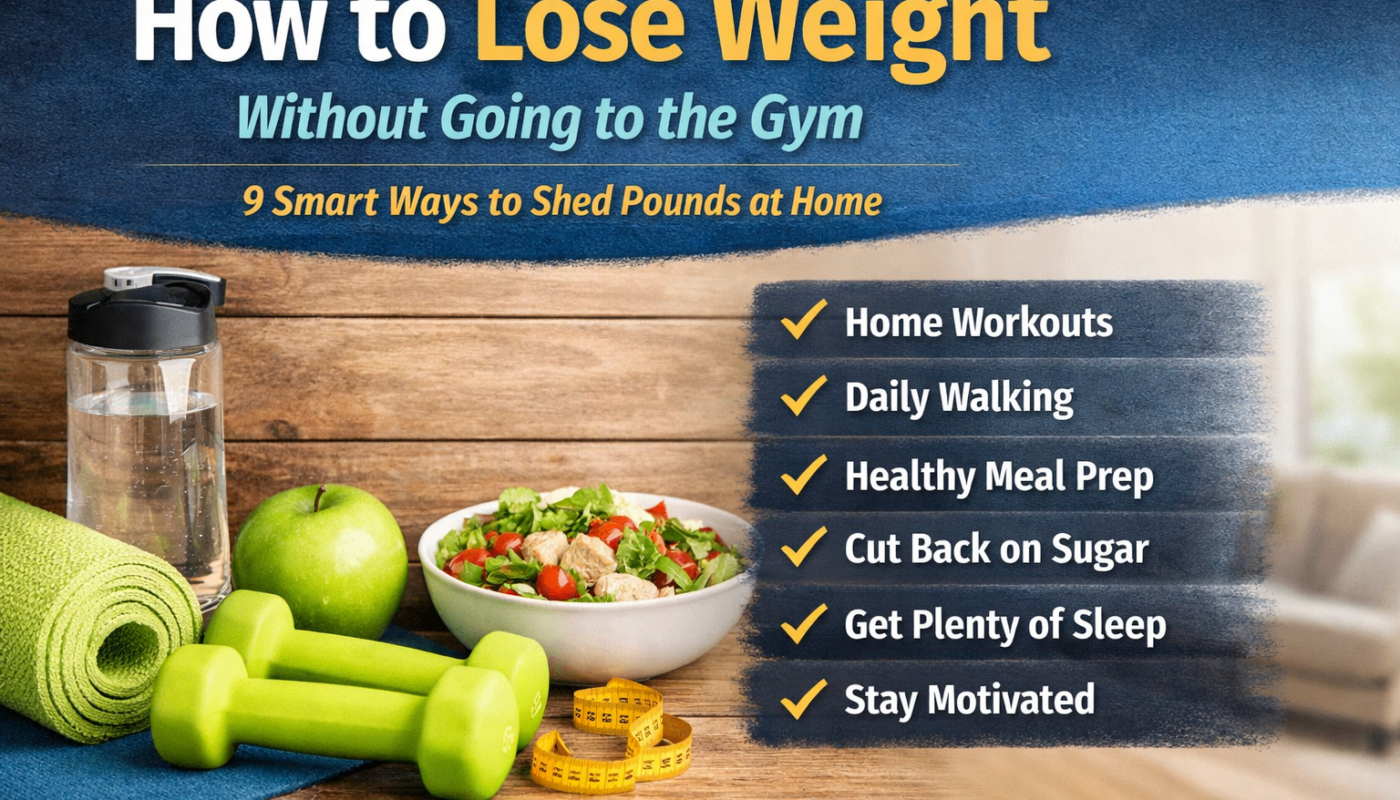
Home Workouts
Your body itself is the most underestimated piece of fitness equipment.
Bodyweight exercises—such as squats, wall push-ups, lunges, and planks—ignite multiple muscle groups at once. These movements raise your heart rate and build lean muscle, which quietly increases calorie burn even at rest.
A simple 20-minute routine, done four times a week, can outperform an inconsistent gym habit. The key is intention, not intensity. Start small. Progress gradually.
Helpful beginner routines can be found on Healthline, a medically reviewed fitness resource.
Daily Walking
Walking is the unsung hero of fat loss.
It’s gentle, accessible, and remarkably effective when done consistently. A brisk walk after meals helps regulate blood sugar and curbs fat storage. Over time, those steps compound—much like saving coins that eventually turn into currency.
Aim for 7,000–10,000 steps a day. Split them if needed. Morning strolls sharpen focus; evening walks calm the nervous system. Both matter.
According to Mayo Clinic, regular walking improves metabolism and supports long-term weight management.
Home Meal Prep
Weight loss often fails in the kitchen before it fails in the gym.
Home meal prep doesn’t require gourmet skills. It requires foresight. Preparing meals in advance reduces impulse eating and portion distortion.
Focus on whole foods: vegetables with texture, proteins that satisfy, and carbohydrates that digest slowly. Think lentils, eggs, oats, brown rice, grilled vegetables, and healthy fats like olive oil.
When food is ready, willpower gets a break—and consistency thrives.
Reducing Sugary Foods
Sugar is polite at first, then quietly disruptive.
Sugary snacks spike energy briefly, then drop it like a curtain. They inflate calorie intake without providing a sense of fullness. Reducing them doesn’t mean deprivation—it means substitution.
Swap soda for infused water. Replace candy with fruit and nuts. Over time, your palate recalibrates, and cravings lose their grip.
The World Health Organization recommends limiting added sugars for maintaining a healthy weight.
Lifestyle Habits That Accelerate Results
Sleep deprivation sabotages fat loss. A tired body clings to energy. Aim for 7–8 hours nightly.
Hydration matters more than most realize. Sometimes hunger is simply thirst in disguise.
Stress management is essential. Chronic stress elevates cortisol, a hormone that encourages fat storage—especially around the abdomen. Breathing exercises, prayer, journaling, or quiet walks all help.
These aren’t extras. They’re foundations.
Tips for Staying Motivated
Motivation fades. Systems endure.
Set behavior-based goals instead of scale-based ones. For example: “I will walk 30 minutes daily” instead of “I will lose 5 kilos.” Progress follows action, not obsession.
Track small wins. Looser clothes. Better sleep. Improved mood. These signals matter more than numbers.
Most importantly, forgive off-days. Consistency isn’t perfection—it’s returning after interruption.
Communities like Verywell Fit offer practical, evidence-based encouragement for long-term success.
Conclusion
Losing weight without going to the gym isn’t a shortcut—it’s a return to basics. Movement woven into daily life. Food chosen with care. Rest is treated as essential, not optional.
The most powerful transformations often happen quietly, away from mirrors and machines.
Dive into more exciting posts that you’ll love!
Start where you are. Use what you have. Build habits that last. Your home is enough. Your body already knows how to respond.