 by
by Breathing Exercises sit at the quiet crossroads between the body and the mind. You do them every second without noticing, yet when done deliberately, they become one of the most reliable tools for easing tension, steadying emotions, and reclaiming mental clarity. This guide is not theory-heavy or mystical. It is grounded in lived experience, practical science, and techniques that real people use in ordinary moments—at work, at home, and in the middle of chaotic days.
Introduction
Stress rarely announces itself politely. It seeps in through tight shoulders, shallow breaths, racing thoughts, and sleepless nights. Many people chase relief through noise—screens, stimulants, distractions—yet overlook the simplest remedy already within reach.
Conscious breathing is not about forcing calm. It is about inviting it. When practiced correctly, breathing exercises act like a dimmer switch, gradually lowering the intensity of stress rather than snapping it off abruptly. Over time, they retrain your nervous system to respond with composure instead of alarm.
This article explores the most effective breathing exercises for stress relief, how they influence your physiology, and when to apply each method for the greatest impact.
How Breathing Affects Stress
Breath is more than air exchange; it is a biological messenger. Rapid, shallow breathing signals danger to the brain. Slow, rhythmic breathing communicates safety.
When stress hits, the sympathetic nervous system takes control. Heart rate increases, muscles tighten, and cortisol floods the bloodstream. Controlled breathing activates the parasympathetic response—the body’s natural braking system—lowering heart rate and blood pressure while easing mental agitation.
Scientific research supports this link. Studies published by institutions such as the Harvard Medical School explain how slow breathing stimulates the vagus nerve, reducing anxiety and improving emotional regulation. You can explore more on this mechanism here:
In short, the way you breathe shapes the way you feel.
Top Breathing Exercises
Box Breathing
Box breathing is structured, precise, and surprisingly grounding. It is often used by athletes, first responders, and military professionals to stay composed under pressure.
Here is how it works:
-
Inhale slowly for four counts
-
Hold your breath for four counts
-
Exhale gently for four counts
-
Pause again for four counts
Repeat this cycle for several minutes.
The symmetry of box breathing creates a sense of order in the nervous system. It is especially effective when your thoughts feel scattered or when stress spikes suddenly, such as before an exam or a difficult conversation.
A practical tip: imagine tracing the edges of a square with each phase of the breath. This mental image keeps your focus anchored.
4-7-8 Breathing
The 4-7-8 method is less rigid but deeply sedative. It is ideal for nighttime stress or when anxiety interferes with sleep.
The pattern is simple:
-
Inhale through the nose for four seconds
-
Hold your breath for seven seconds
-
Exhale slowly through the mouth for eight seconds
This extended exhalation encourages the body to release tension. Many people notice their heart rate slowing within just two or three cycles.
If you are new to this technique, start gently. Forcing the breath can create discomfort. Over time, your lung capacity and comfort will naturally improve.
For more scientific insight into breath pacing and relaxation, the Cleveland Clinic provides a clear overview:
https://health.clevelandclinic.org/4-7-8-breathing/
Diaphragmatic Breathing
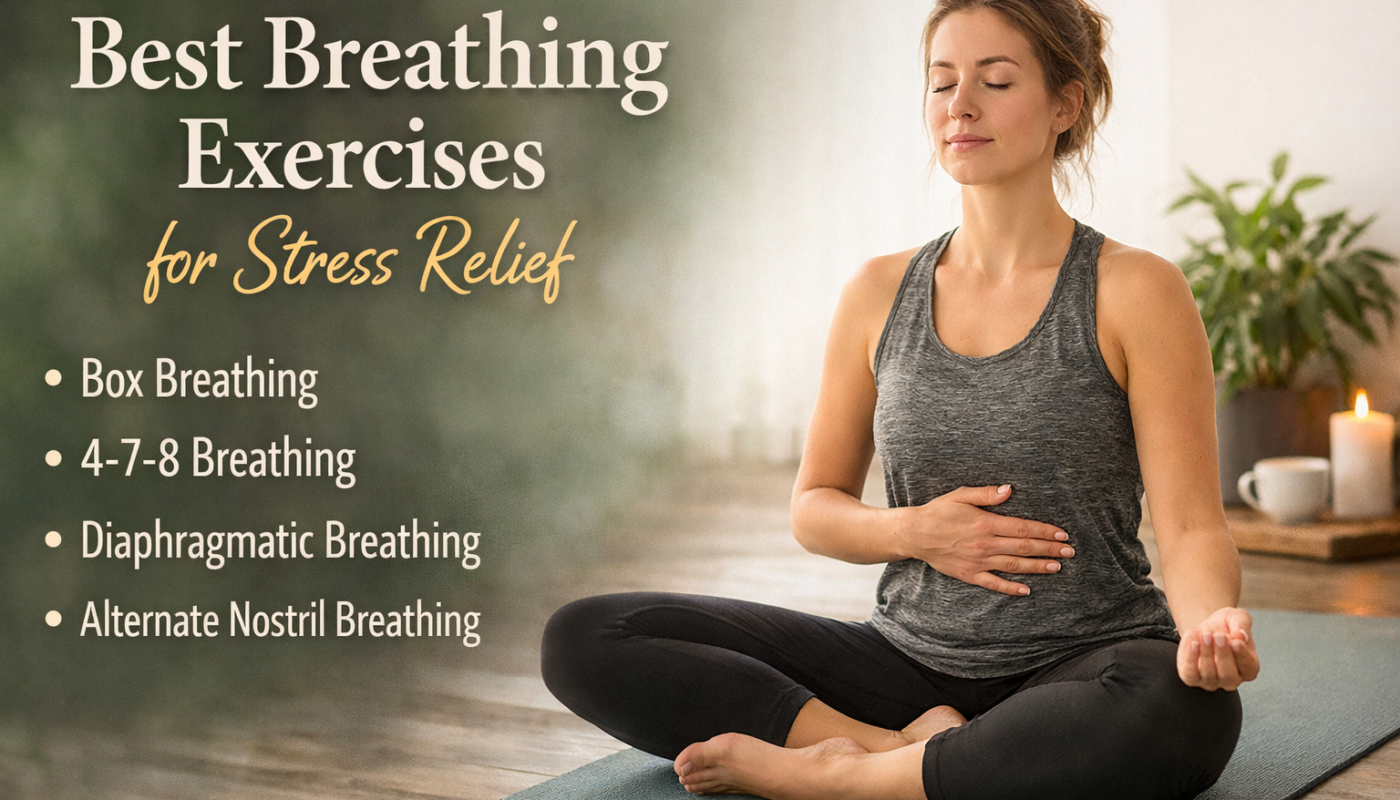
Diaphragmatic breathing, sometimes called belly breathing, restores the natural breathing pattern many adults lose due to chronic stress.
Instead of lifting the chest, this method encourages the abdomen to expand with each inhale. The diaphragm descends, allowing the lungs to fill more completely.
To practice:
-
Place one hand on your chest and the other on your stomach
-
Inhale slowly through the nose, feeling the belly rise
-
Exhale through the mouth, letting the abdomen fall
This technique improves oxygen exchange and reduces muscle tension. It is especially useful during prolonged stress, such as long workdays or extended periods of worry.
Diaphragmatic breathing also pairs well with mindfulness or light stretching, making it a versatile daily habit.
Alternate Nostril Breathing
Alternate nostril breathing has roots in traditional practices, yet its effects are remarkably practical. It balances the nervous system and sharpens mental focus.
The process involves gently closing one nostril while breathing through the other, then switching sides in a steady rhythm.
This method may feel unfamiliar at first, but many people find it calming once they establish a flow. It is particularly helpful for mental fatigue, emotional imbalance, or overstimulation from screens and noise.
When to Use These Exercises
Timing matters. Different breathing exercises serve different moments.
Use box breathing during high-pressure situations where clarity is essential. It brings order to mental chaos.
Turn to 4-7-8 breathing when stress disrupts sleep or leaves you restless at night. It signals the body to slow down.
Practice diaphragmatic breathing as a daily reset. It works best when stress is ongoing rather than acute.
Choose alternate nostril breathing when you feel mentally unbalanced or overstimulated. It restores equilibrium and focus.
The most effective approach is consistency. Even five minutes a day can create noticeable changes over time.
Experience-Based Advice for Real Life
Breathing exercises are not magic tricks. They work best when woven into real routines.
Try practicing before meals to improve digestion. Use slow breathing while walking instead of reaching for your phone. Pair breathing with journaling or quiet reflection to deepen its effect.
One important reminder: progress is subtle. The benefits accumulate quietly, like compound interest for your nervous system.
Conclusion
Stress may be unavoidable, but suffering does not have to be constant. Breathing exercises offer a rare combination of simplicity and power. They require no equipment, no payment, and no special setting—only attention.
By learning when and how to breathe with intention, you give your body permission to relax and your mind room to settle. Over time, this practice becomes less of a technique and more of a way of living.
“Don’t miss out on more exciting posts like this one!”
Start small. Breathe deeply. Let calm follow.