 by
by Introduction
Dumbbell Exercises are often underestimated, quietly sitting in the corner of a room while people chase flashy machines and crowded gyms. Yet, for anyone serious about forging muscle at home, dumbbells are not a compromise—they are a weapon of precision.
I have trained in small rooms, on uneven floors, and in moments where motivation felt thin. Dumbbells stayed reliable. They don’t demand space or noise. They simply ask for effort. This guide breaks down the most effective dumbbell movements you can perform at home to build real muscle—strength you can feel in daily life, not just admire in the mirror.
Why Dumbbells Are Great for Home Training
Dumbbells offer a rare blend of simplicity and potency. Unlike machines that lock your body into fixed paths, dumbbells allow natural motion. Your joints move as they were designed to move, and your stabilizing muscles wake up fast.
Another overlooked advantage is symmetry. Dumbbells expose imbalances mercilessly. If one side is weaker, there is nowhere to hide. Over time, this leads to more balanced strength and cleaner movement.
From a practical angle, dumbbells are economical and durable. A single adjustable set can replace an entire gym corner. According to strength experts at the American Council on Exercise, free weights encourage better functional strength compared to machines. You can explore their insights here:
https://www.acefitness.org
Best Dumbbell Exercises
Each exercise below has earned its place through effectiveness, not trendiness. Perform them with control, intent, and respect for form.
Dumbbell Chest Press
The dumbbell chest press is a cornerstone movement for upper-body mass. Unlike a barbell, dumbbells allow a deeper stretch at the bottom, which often translates into better muscle activation.
Lie on a bench or the floor if space is limited. Lower the weights slowly, elbows drifting slightly outward, then press upward as if pushing the ceiling away from you. The chest should feel engaged, not the shoulders straining.
This movement mirrors real-world pushing strength. Think of lifting a heavy box or moving furniture—this is where that power is built.
Dumbbell Shoulder Press
Shoulders give the body its broad, athletic silhouette. The dumbbell shoulder press sculpts that frame while reinforcing joint stability.
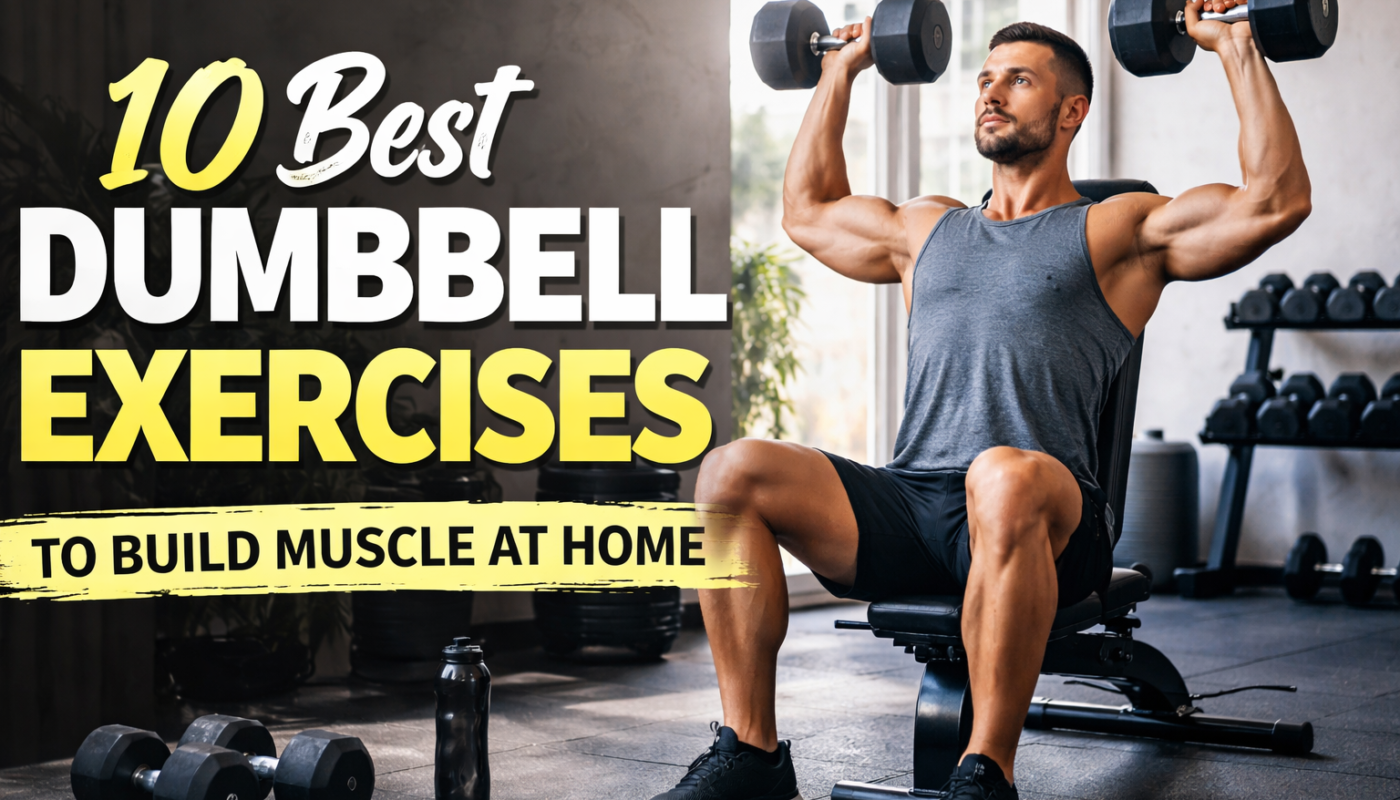
Seated or standing, raise the dumbbells to shoulder height. Press upward until your arms extend, but avoid locking the elbows harshly. Lower with patience.
Standing variations recruit the core, turning this into a full-body effort. It teaches your body to coordinate strength rather than isolate it artificially.
Dumbbell Squats
Leg training at home is often neglected, yet dumbbell squats are brutally effective. Holding weights at your sides or shoulders adds resistance without complicating the movement.
Sink into the squat as if sitting back into a chair. Keep your chest upright and your heels grounded. Drive upward with intent.
This exercise strengthens the legs, glutes, and even the lower back. Over time, daily movements like climbing stairs feel lighter, almost trivial.
For squat mechanics and mobility tips, this resource is worth reading:
https://www.strongerbyscience.com/squat/
Dumbbell Deadlifts
If there is one exercise that teaches respect for form, it is the deadlift. Dumbbell deadlifts are friendlier for home setups and still deliver impressive results.
Hold the dumbbells in front of your thighs. Push the hips back while keeping your spine neutral. Lower the weights along your legs, then stand tall by squeezing the glutes.
This movement strengthens the posterior chain—the muscles that support posture and protect the lower back. It is less about lifting heavy and more about moving correctly.
Dumbbell Rows
Rows are essential for a strong, resilient back. Dumbbell rows help counterbalance all the pressing movements we perform daily.
Bend slightly forward, hinge at the hips, and pull the dumbbells toward your ribs. Imagine squeezing a pencil between your shoulder blades.
This exercise improves posture and upper-back thickness. Many people notice reduced shoulder discomfort once rows become a regular habit.
Dumbbell Bicep Curls
Bicep curls may seem obvious, but done correctly, they remain unmatched for arm development. Dumbbells allow each arm to work independently, reducing compensation.
Curl the weights upward with steady control. Avoid swinging or leaning back. Let the muscle do the work, not momentum.
For variation, try alternating curls or rotating your wrists slightly as you lift. These small adjustments keep the movement fresh and engaging.
Safety Tips for Using Dumbbells
Training at home removes external supervision, making self-awareness essential. Start each session with a brief warm-up—arm circles, light squats, or dynamic stretches work well.
Choose weights that challenge you without sabotaging form. Muscle grows from tension, not recklessness. If your movement becomes sloppy, the weight is too heavy for that set.
Pay attention to breathing. Exhale during effort, inhale during the easier phase. This simple habit improves performance and reduces unnecessary strain.
For injury prevention guidance, the Mayo Clinic offers clear advice on resistance training safety:
https://www.mayoclinic.org/healthy-lifestyle/fitness/in-depth/strength-training/art-20046670
Conclusion
Building muscle does not demand a gym membership or elaborate machines. Dumbbell Exercises offer a direct, honest path to strength—one rooted in effort, patience, and consistency.
Check out our other exciting posts!
Train with intention. Respect your limits, then gradually push them. Over time, those quiet dumbbells will reshape not just your body, but your confidence in what you can accomplish at home.